

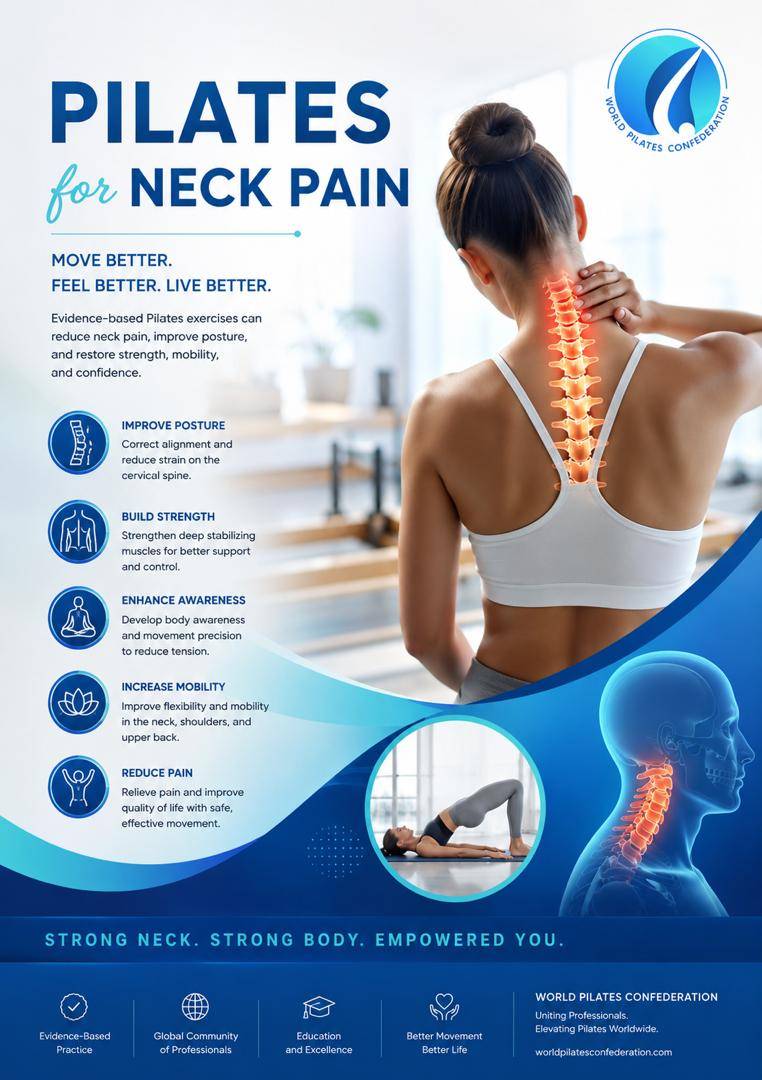
Pilates for Neck Pain: Evidence-Based Benefits, Therapeutic Exercises, and Clinical Recommendations
Pilates for Neck Pain: Evidence-Based Benefits, Exercises, and Safety Considerations
Introduction
Neck pain is one of the most common musculoskeletal disorders worldwide, affecting people of all ages. Poor posture, prolonged sitting, excessive smartphone use, stress, and muscle imbalances contribute significantly to chronic neck discomfort. According to the World Health Organization (WHO), neck pain is among the leading causes of disability globally.
Pilates has gained recognition as a therapeutic exercise method that emphasizes postural alignment, core stability, breathing, body awareness, and controlled movement. Increasing research suggests that Pilates may help reduce neck pain, improve function, and enhance quality of life when incorporated into a comprehensive rehabilitation program.
⸻
Understanding Neck Pain
The cervical spine consists of seven vertebrae supported by muscles, ligaments, discs, and joints. When these structures become overloaded or dysfunctional, pain and stiffness may occur.
Common causes include:
* Forward head posture
* Weak deep neck flexors
* Rounded shoulders
* Muscle tension
* Sedentary lifestyle
* Degenerative cervical changes
* Stress-related muscle tightness
Persistent neck pain often results from impaired movement patterns rather than a single injury.
⸻
Why Pilates Helps Neck Pain
Pilates addresses many of the underlying factors associated with chronic neck pain.
1. Improves Postural Alignment
Pilates emphasizes neutral spine positioning and proper shoulder girdle mechanics, helping reduce excessive loading on cervical structures.
Research has shown that correcting forward head posture can significantly decrease cervical muscle strain.
⸻
2. Strengthens Deep Stabilizing Muscles
Instead of overusing superficial muscles like the upper trapezius, Pilates activates:
* Deep cervical flexors
* Serratus anterior
* Lower trapezius
* Transversus abdominis
* Multifidus
These muscles improve spinal support and reduce compensatory tension.
⸻
3. Enhances Body Awareness
Many individuals with chronic neck pain unknowingly maintain excessive muscle tension throughout daily activities.
Pilates teaches movement precision, breathing control, and neuromuscular awareness, helping patients recognize and reduce unnecessary muscle activation.
⸻
4. Improves Thoracic Mobility
Restricted thoracic spine mobility often increases stress on the cervical spine.
Pilates exercises encourage extension and rotation of the thoracic spine, decreasing compensatory neck movement.
⸻
5. Reduces Pain and Disability
Several clinical trials have demonstrated improvements in:
* Pain intensity
* Neck Disability Index (NDI)
* Functional movement
* Range of motion
* Quality of life
⸻
Recommended Pilates Exercises
The following exercises are commonly used in rehabilitation programs for individuals with mild to moderate neck pain.
Shoulder Bridge
Benefits:
* Strengthens posterior chain
* Improves spinal articulation
* Promotes pelvic stability
⸻
Chest Lift
Benefits:
* Activates deep abdominal muscles
* Encourages cervical alignment
* Improves trunk stability
⸻
Scapular Isolation
Benefits:
* Restores scapular control
* Reduces upper trapezius dominance
* Enhances shoulder mechanics
⸻
Arm Openings
Benefits:
* Improves thoracic rotation
* Decreases cervical stiffness
* Promotes postural balance
⸻
Swimming (Modified)
Benefits:
* Strengthens spinal extensors
* Encourages postural endurance
* Improves scapular stability
⸻
Cat Stretch
Benefits:
* Enhances spinal mobility
* Relieves muscle tension
* Encourages segmental movement
⸻
Safety Considerations
Pilates should always be individualized.
Avoid:
* Painful movements
* Excessive cervical extension
* Rapid ballistic movements
* Heavy resistance during acute pain
Individuals with cervical radiculopathy, severe disc herniation, fractures, inflammatory diseases, or recent surgery should consult a healthcare professional before beginning an exercise program.
⸻
Current Evidence
A growing body of research supports Pilates for chronic neck pain.
Systematic reviews indicate that Pilates can significantly reduce pain intensity and improve functional disability when compared with minimal intervention or general exercise, although more high-quality randomized controlled trials are still needed.
The greatest benefits appear when Pilates is supervised by qualified instructors and combined with education and ergonomic modifications.
⸻
Conclusion
Pilates is a safe, low-impact exercise method that addresses posture, spinal stability, breathing, and movement control—all essential components in managing chronic neck pain.
Although Pilates is not a cure for every cervical condition, evidence suggests it can be an effective component of conservative treatment for many individuals experiencing non-specific neck pain.
Appropriate assessment, individualized programming, and proper exercise progression remain essential for optimal outcomes.
⸻
References
1. Cramer H, et al. Effects of yoga and Pilates on chronic neck pain: A systematic review and meta-analysis. PLoS One. 2023.
2. Gross AR, et al. Exercises for mechanical neck disorders. Cochrane Database of Systematic Reviews. 2015.
3. Blanpied PR, et al. Neck Pain Clinical Practice Guidelines Revision 2017. Journal of Orthopaedic & Sports Physical Therapy. 2017;47(7):A1–A83.
4. World Health Organization (WHO). Musculoskeletal Health.
5. Latey P. The Pilates Method: History and Philosophy. Journal of Bodywork and Movement Therapies. 2001.
6. Kloubec JA. Pilates for Improvement of Muscle Endurance, Flexibility, Balance, and Posture. Journal of Strength and Conditioning Research. 2010.
7. Wells C, Kolt GS, Bialocerkowski A. Defining Pilates Exercise: A Systematic Review. Complementary Therapies in Medicine. 2012.
8. American Physical Therapy Association (APTA). Clinical Practice Guidelines for Neck Pain.




No comment