

Pilates Balance: The Evolution of Strength, Stability and Movement Control
Pilates Balance represents a dynamic evolution of Pilates training, combining the fundamental principles of Pilates with suspension-based and functional movement exercises.
By challenging the body through controlled instability, Pilates Balance develops core strength, balance, coordination, flexibility, stability, and body awareness while maintaining the essential principles of controlled and precise movement.
Since 2007, Pilates Balance has been active internationally, contributing to the development and expansion of this innovative approach to Pilates training across different countries and professional communities.
What Is Pilates Balance?
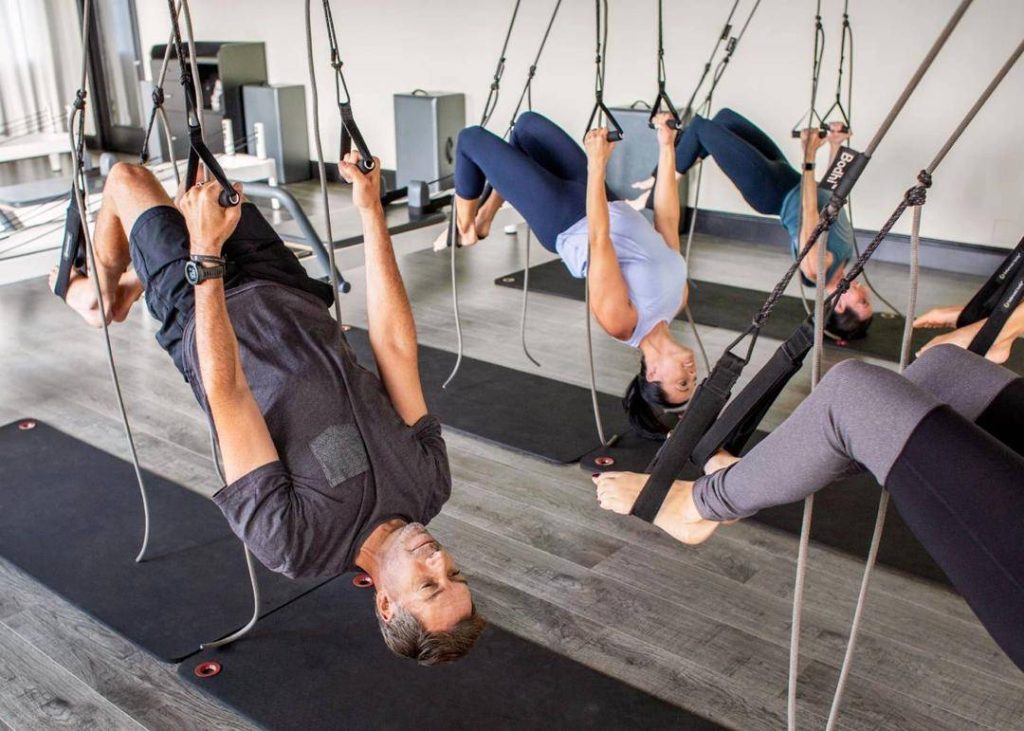
Pilates Balance is a specialized approach that integrates traditional Pilates principles with suspension training systems, including straps and bodyweight-based suspension equipment.
During Pilates Balance exercises, part of the body may be supported or suspended from straps. This changes the body’s relationship with gravity and creates a controlled instability.
As a result, the practitioner must continuously engage the core and stabilizing muscles to maintain proper alignment, balance, and movement control.
The objective is not simply to make an exercise more difficult. Pilates Balance is designed to develop intelligent movement, functional strength, postural control, and greater awareness of the body.
The Principles Behind Pilates Balance
Although Pilates Balance introduces modern equipment and movement challenges, it remains connected to the fundamental principles of Pilates:
- Control
- Concentration
- Centering
- Precision
- Breathing
- Flow
- Postural alignment
- Body awareness
The combination of these principles with suspension-based movement creates a progressive and versatile training environment.
Benefits of Pilates Balance
-
Enhanced Core Strength
Suspension exercises require continuous stabilization of the trunk. The deep abdominal, back, pelvic, and postural muscles are challenged throughout the movement.
-
Improved Balance and Stability
The suspended environment creates controlled instability, encouraging the neuromuscular system to respond and adapt while maintaining alignment.
-
Better Coordination
Pilates Balance requires the body to coordinate movement across different planes, improving movement awareness and overall coordination.
-
Increased Flexibility and Mobility
Controlled movement patterns and dynamic stretching can support improved mobility and flexibility when performed correctly.
-
Functional Full-Body Conditioning
Unlike isolated training, Pilates Balance can involve several muscle groups simultaneously, creating an integrated full-body workout.
-
Improved Postural Awareness
Maintaining correct alignment while working against instability can help practitioners develop greater awareness of posture and movement quality.
-
Adjustable Training Intensity
Pilates Balance exercises can be modified according to the individual’s experience, physical ability, goals, and level of training.
Pilates Balance vs. Classic Pilates
| Feature | Classic Pilates | Pilates Balance |
|---|---|---|
| Training Environment | Ground-based | Suspended or partially suspended |
| Equipment | Mat, Reformer and Pilates apparatus | Suspension straps and functional equipment |
| Stability Demand | Controlled | Controlled instability |
| Core Activation | High | High with additional stabilization demands |
| Movement | Precise and controlled | Precise, dynamic and multidirectional |
| Balance Challenge | Moderate | Adjustable and progressive |
| Coordination | Controlled | Dynamic and functional |
Both approaches share the same commitment to quality movement. Pilates Balance should therefore be viewed as an evolution and extension of Pilates practice, rather than a replacement for traditional Pilates.
Who Can Practice Pilates Balance?
Pilates Balance can be adapted for a broad range of participants, including:
- Pilates practitioners seeking a new training experience
- Fitness professionals interested in functional movement
- Athletes developing core stability and coordination
- Beginners following an appropriate progression
- Experienced Pilates instructors expanding their professional knowledge
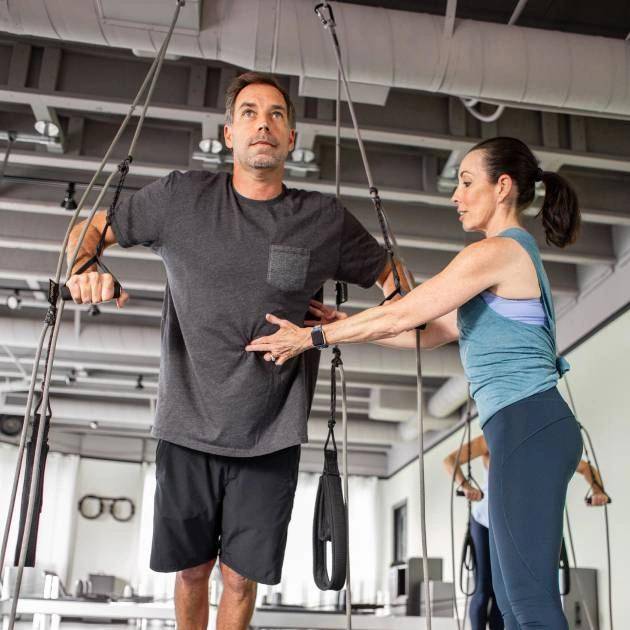
For individuals with injuries, medical conditions, or specific physical limitations, training should be adapted under appropriate professional supervision.
Pilates Balance and Professional Education
As Pilates continues to develop internationally, professional education and standardized training remain essential.
A qualified Pilates Balance instructor should understand not only how to perform the exercises, but also the principles of anatomy, biomechanics, movement analysis, exercise progression, safety, teaching methodology, and professional responsibility.
High-quality education helps ensure that new approaches to Pilates remain connected to safe, intelligent, and purposeful movement.
Pilates Balance Since 2007
Since 2007, Pilates Balance has been active internationally, becoming part of the continuing development of modern Pilates practices.
Its evolution reflects the growing interest in combining the traditional foundations of Pilates with innovative training methods while maintaining an emphasis on control, precision, balance, strength, and movement quality.
The international development of Pilates Balance demonstrates how Pilates can continue to evolve while respecting its fundamental movement principles and heritage.
The Future of Pilates Balance
The future of Pilates lies not only in new equipment or more challenging exercises, but in better education, professional standards, scientific understanding, and responsible teaching.
Pilates Balance provides an opportunity to explore new dimensions of movement while preserving the essential values that make Pilates an effective and adaptable movement system.
From studios and fitness environments to professional education programs, Pilates Balance can offer a progressive pathway for practitioners who want to develop strength, stability, balance, coordination, and body awareness.
Conclusion
Pilates Balance is more than suspension training. It is a structured approach to movement that combines the foundations of Pilates with balance, instability, functional strength, and controlled bodyweight movement.
Active internationally since 2007, Pilates Balance continues to represent an innovative pathway within the development of Pilates.
Strength. Stability. Balance. Control.
Pilates Balance — Moving Forward Through Better Movement.
🧘♂️ Ready to Elevate Your Pilates Journey?
Experience the power of Suspension Pilates with personalized training!
Whether you're a beginner or looking to level up, we're here to guide you every step of the way.
Contact us now and take your first step.