
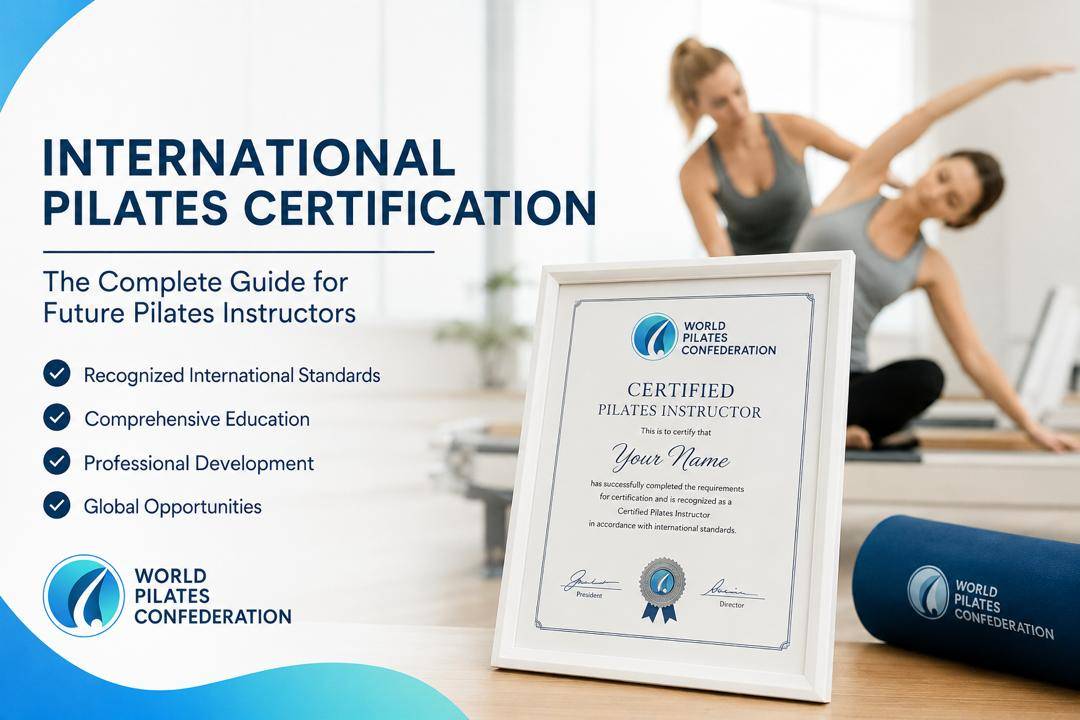
International Pilates Certification:
Complete Guide for Future Pilates Instructors
Why Choose an International Pilates Certification?
An International Pilates Certification helps instructors build a professional career with confidence. It shows that you have completed structured education, practical training, and professional assessments.
Today, Pilates studios, wellness centers, and rehabilitation clinics prefer instructors who meet international educational standards.
Professional certification also improves teaching quality and helps clients feel confident in your knowledge and skills.
What Is an International Pilates Certification?
An International Pilates Certification is a professional qualification designed for future Pilates instructors.
Unlike short workshops, a complete certification program combines theory with practical experience. Students learn Pilates principles, anatomy, biomechanics, exercise programming, client assessment, and safe teaching methods.
This education prepares instructors to work with different populations in professional environments.
Why Professional Certification Matters
Choosing a recognized certification program offers many long-term benefits.
Certified instructors often have better employment opportunities. They also gain more trust from clients and employers.
A professional education helps instructors reduce injury risks while improving the quality of every session.
For many instructors, certification is the first step toward an international Pilates career.
What Should a Quality Certification Program Include?
Not every course follows the same educational standards.
A professional program should include:
- Comprehensive Pilates education
- Functional anatomy
- Biomechanics
- Practical teaching experience
- Client assessment
- Safety guidelines
- Professional ethics
- Final practical examinations
Continuing education is another important part of professional development.
Career Opportunities
After earning an International Pilates Certification, instructors may work in different settings.
Popular career paths include:
- Pilates studios
- Fitness centers
- Rehabilitation clinics
- Hospitals
- Wellness resorts
- Corporate wellness programs
- Private coaching
- Online Pilates classes
Many professionals also specialize in Medical Pilates, Prenatal Pilates, Athletic Performance, Healthy Aging, or Neurological Rehabilitation.
The Global Growth of Pilates
Pilates continues to expand across Europe, North America, Asia, Australia, South America, and the Middle East.
As the industry grows, employers increasingly look for instructors who have completed professional education and continue learning throughout their careers.
International educational standards help improve consistency and public confidence in the Pilates profession.
How to Choose the Right Certification
Before joining any certification program, ask a few important questions.
- Does the curriculum cover both theory and practice?
- Are qualified educators involved?
- Is practical teaching assessed?
- Does the organization encourage continuing education?
- Are ethical standards clearly defined?
- Is the certification respected within the Pilates community?
Choosing the right program is an investment in your future.
Continue Learning After Certification
Professional instructors never stop learning.
Continuing education may include:
- Advanced workshops
- Clinical education
- International conferences
- Research seminars
- Specialty certifications
- Professional networking
Lifelong learning helps instructors provide better care for every client.
Conclusion
An International Pilates Certification represents more than completing a course.
It reflects dedication, professionalism, and a commitment to lifelong education.
Whether you are starting your journey or expanding your experience, choosing a high-quality certification program can strengthen your career and support the future of the global Pilates profession.
FAQ
What is an International Pilates Certification?
It is a professional qualification that prepares instructors through structured education, practical training, and competency assessments.
How long does a Pilates certification take?
The duration depends on the organization, but comprehensive programs usually require several months of study and practical training.
Can I teach Pilates internationally?
Many employers value internationally recognized education. However, local employment requirements may differ by country.
Why is continuing education important?
Continuing education helps instructors stay updated with research, improve teaching skills, and provide safer, more effective sessions.
Internal Links
- Pilates Teacher Training
- Medical Pilates
- Pilates Equipment
- Pilates Principles
External Link
- National Center for Biotechnology Information (NCBI)
- World Health Organization (WHO)

No comment